Institute leads and affiliates
Dr. Suzanne Stewart | Scientific Director
Dr. Suzanne Stewart is a member of the Yellowknives Dene First Nation.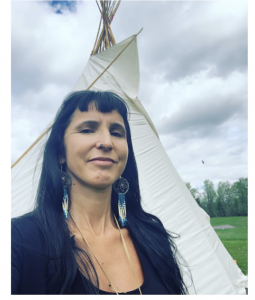
She is a registered psychologist and Director of the Waakebiness-Bryce Institute for Indigenous Health at the Dalla Lana School of Public Health at the University of Toronto (U of T), where she is a Professor in the Division of Social and Behaviour Health Sciences. She holds the TC Energy Research Chair in Indigenous Health. Research and teaching interests include Indigenous health and healing in psychology (homelessness, youth mental health, identity, and work-life development), Indigenous determinants of health, Indigenous pedagogies in higher education and health sciences, and Indigenous research ethics and methodologies. She is committed to advancing Indigenous healing issues in academics, health practice, and policy.
Dr. Billie-Jo Hardy | Associate Scientific Director & Assistant Professor
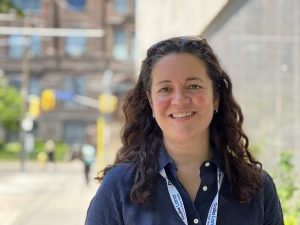
Dr. Billie-Jo Hardy is currently an Associate Director for WIIH, is an Assistant Professor at the Dalla Lana School of Public Health and an Affiliate Scientist at the Well Living House at the Li Ka Shing Knowledge Institute. She is working with the Waakebiness research team to develop an Indigenous health research program on neurological health and wellness. She is also co-leading, in partnership with Indigenous organizations and communities, the development of a biological health research training program that incorporates Indigenous and Western knowledges that will strengthen capacities and create opportunities for interested First Nation communities to lead biological health research. Her research interests include Indigenous and global public health research and implementation, innovation sciences, health equity and research ethics. Dr. Hardy spent several years at the Well Living House where she led research programs on evaluating Indigenous cultural safety training programs and reviewing policy and practice in Indigenous health research. Dr. Hardy began her career as a research fellow at the Sandra Roman Centre for Global Health Research, specializing in research ethics, global health and innovation sciences. She has advised global health agencies and foundations, including the Bill & Melinda Gates Foundation, PATH and Grand Challenges Canada.
John Wabegijik | Research Coordinator

John Wabegijik is Ojibway and a proud member of Sheshegwaning First Nation located on Manitoulin Island. John has lived and worked in Toronto for several years. John’s past work experience includes working in administration for Na-Me-Res (Native Men’s Residence). John recently obtained his BA Degree in Public Administration and Governance through Ryerson University in partnership with FNTI (First Nations Technical Institute). John is very excited to be part of Waakebiness Institute for Indigenous Health team and looking forward to assisting in the many positive projects.
Michael Brown | WIIH Research Officer and Cultural and Spiritual Events Coordinator
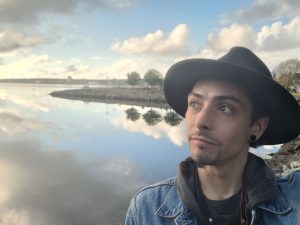
Michael Brown is of Stolo Nation, Irish, Métis and Icelandic ancestry, having been raised in the western culture, now decolonizing himself through Spirit and ceremony. He has achieved an honour’s undergraduate degree in Psychology at York University and a Master of Education degree at OISE. He is currently working on his PhD in Social and Behavioural Health Sciences at U of T for the improvement of mental health of Indigenous youth. As a research officer and cultural and spiritual events coordinator for Waakebiness Institute for Indigenous Health, he works with community and Elders to improve (Indigenize) academia.
Dr. Debby Wilson Danard | Grandmother
 Dr. Debby Wilson Danard is Anishinaabekwe, sturgeon clan member from Rainy River First Nation. She is a cultural carrier, motivational speaker, visual and performance artist, lecturer, writer, and water protector dedicated to Indigenous life promotion. Following her Grandmother’s teachings, she inspires others to connect with culture, community, and the strength of their own stories. Dr. Deb works with Indigenous Life Promotion pathways at the centre of her practice, sharing knowledge with many urban and on-reserve communities and organizations and several post-secondary institutions within Ontario. Her thesis, Medicine Wheel Surviving Suicide Strengthening Life Bundle (2016), and co-founding Feather Carriers:Leadership for Life (2015) reflects her commitment to strengthening connection to teachings and practices.
Dr. Mikaela D. Gabriel | Research Scientist & Assistant Professor
 Dr. Mikaela D. Gabriel, C. Psych (Italian & Mi’kmaq of Ktaqmkuk; she/her) is a Mi’kmaq Gabriel (crow clan) originally of Codroy Valley/Indian Hill, Ktaqmkuk (Newfoundland), and lives and works in Tkaronto. She is a clinical and counselling psychologist and provides clinical mental health care to the urban Indigenous community. She holds the Canada Research Chair in Indigenous Women and Two-Spirit Mental Health and Homelessness at Unity Health Toronto, where she works as a Research Scientist with MAP Centre for Urban Health Solutions and Well Living House. She is an Assistant Professor-Affiliated Scientist at the Waakebiness Institute for Indigenous Health at the Dalla Lana School of Public Health, University of Toronto, where she completed a postdoctoral fellowship. She is the head of the Network for Aboriginal Mental Health Research (NAMHR), and member of the Ontario Network Environments for Indigenous Health Research (ON NEIHR). Her research focuses is the promotion of positive cultural identity, strength, and healing through traditional knowledge and cultural support through mental health, homelessness, primary care access, and wellbeing. She is a writer, traveler, and auntie with two very cute cats.
Dr. Melanie Jeffery | Interim Program Coordinator MPH-IH & Assistant Professor
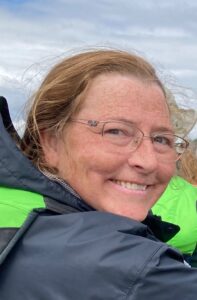 Miigwams ni-dish-ni-kaz, Parry Sound ni-doon-ji-bah. My name is Melanie Jeffrey, and I am a settler of English, Welsh, and Scottish descent from Parry Sound, on the traditional territory of the Anishinaabeg in the Williams Treaties area. My current position is the Program Director, Master of Public Health in Indigenous Health at the University of Toronto. I have been working with Indigenous education since 2008, when I began to collaboratively develop a first Indigenous science breadth requirement with staff, students, faculty and community members.
My graduate work and postgraduate work focused on neuroscience, pharmacology, and epilepsy (PhD Pharmacology, U of T, 2014). I also studied health, ecological and social sciences and Indigenous studies (BA Health Studies, U of T, 2008) and Fine Arts (BFA Film Production, York U, 1999). I was in two diverse postdoctoral fellowships, first in fundamental neurobiology and models of stroke, seizures, and FASD, followed by public health and Indigenous traumatic spinal cord injuries.
My research and teaching interests include Indigenous environmental justice, the health of peoples and lands, and the nexus between Indigenous Knowledge Systems and STEM, including health, ecology, and engineering approaches to address community-directed research agendas. In teaching and research my role is to listen, connect people, and bridge ways of knowing to inform social justice and equity in health and environmental problem solving.
Shanti Arguilar-Cardenas | NEIHR Coordinator
 Shanti Aguilar-Cardenas is one of two daughters, born and raised on Treaty 1 Territory, and of mixed ancestry (Mestiza), from Ixim Ulew (Guatemala). She is a Research Officer and Coordinator for the ON NEIHR at the Waakebiness Institute for Indigenous Health. Shanti holds a Master of Public Health in Indigenous health from the Dalla Lana School of Public Health at the University of Toronto. Before pursuing Graduate School, she spent several years working for a global health non-profit in Guatemala and the Dominican Republic to deliver medical and public health services in Mayan Nation communities, and Haitian and Dominican communities. Outside of the office, she can be found practicing yoga, birding, and walking with her dog, Yogi.
Contact Us
Phone: (416) 978 8502
Email: wbiih.dlsph@utoronto.ca